
The absolute amount of money raised is more than three times the 2 trillion seen before the pandemic (June 2019).

The National Stock Exchange of India's (NSE) mega Rs 22,569-crore initial public offering (IPO) opened for subscription, receiving 9 per cent bids on its first day, with strong participation from anchor investors.
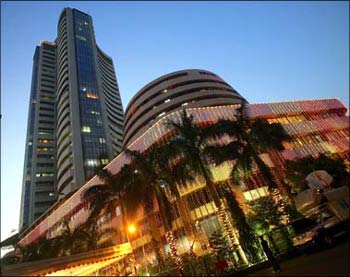
India's stock exchanges are considering trading on February 28, the federal Budget day, which falls on a Saturday.

HSBC has emerged as the leading international bank in facilitating fundraising for Indian companies through bonds, syndicated loans, and IPOs during January-September 2026, according to Hitendra Dave, CEO of HSBC India.

The 100-year old Calcutta Stock Exchange is finally set to launch a trading platform, which will enable its members to trade on National Stock Exchange (NSE)-listed securities in the next one month, a move that will give the ailing exchange a fresh lease of life.

SEBI Chairman Tuhin Kanta Pandey stated that the National Stock Exchange (NSE) has not submitted any proposal seeking approval to trade on its own platform after getting listed, and such trading is currently not permitted. He also confirmed that SEBI would examine concerns raised by brokers and asset management companies regarding the new UPI Merchant Discount Rate (MDR) framework.
The Tata Sons board has voted to reappoint N Chandrasekaran as chairman for a third five-year term, a decision influenced by the Reserve Bank of India's rejection of the company's application to surrender its NBFC registration, which revives the prospect of a stock market listing.

The Indian government has notified the Legal Metrology (Indian Standard Time) Rules, 2026, establishing IST as the sole reference for all official purposes nationwide. These rules, effective in 180 days, aim to synchronise digital systems, reduce reliance on foreign time sources, and enhance coordination across critical sectors like banking, railways, and telecommunications.
India's derivatives market experienced a significant 23 per cent fall in average daily contracts traded in August, reaching a 13-month low of 224 million. This decline is primarily attributed to regulatory changes, including a higher securities transaction tax (STT) and enhanced collateral requirements, alongside the introduction of a closing auction session.

Trillions of transactions take place in these bourses making investors poorer or richer...

Close to 20 regional stock exchanges, including the big exchanges of Delhi, Chennai, and Bengaluru, have voluntarily exited in the face of SEBI's stringent regulations. Namrata Acharya finds out what makes CSE continue to fight its lone battle.

A special PMLA court in Mumbai has allowed the monetisation of attached assets worth over Rs 3,400 crore in the National Spot Exchange Limited (NSEL)-linked payment default case. This decision paves the way for the restitution of funds to thousands of investors who have been awaiting recovery for 13 years since the 2013 payment default.

A special PMLA court in Mumbai has allowed the monetisation of attached assets worth over Rs 3,400 crore in the National Spot Exchange Limited (NSEL)-linked money laundering case. This decision paves the way for the restitution of funds to thousands of investors who have been awaiting recovery for 13 years since the 2013 payment default. Up to Rs 1,950 crore from the monetisation will be paid to 63 Moons Technologies Ltd for specified creditors.

The search for N Chandrasekaran's successor as Tata Sons Chairman has reportedly narrowed to Tata Steel CEO T V Narendran, Tata Sons Executive Director Saurabh Agrawal, and NSE MD & CEO Ashish Chauhan, with Chauhan emerging as a potential 'dark horse' candidate.

Jio Platforms Ltd, the digital services arm of Reliance Industries, has secured Sebi's final observation to launch an initial public offering (IPO) aiming to raise approximately USD 4 billion (Rs 37,700 crore), potentially making it the largest IPO in India's history.

Liquidity stress in smallcap funds has fallen to its lowest level since February 2024, with the average time to liquidate 50% of portfolios dropping to 27 days in June from a peak of 44.2 days in January 2026, driven by a sharp recovery in smallcap stocks and increased trading volumes.

Capital markets regulator Sebi Chairman U K Sinha advocated the listing of bourses and greater competition among exchanges.

BSE, which recently concluded its Rs 1,243-crore initial public offering, will list on rival National Stock Exchange on Friday.

August 2026 witnessed a significant surge in India's primary market, with 21 mainboard initial public offerings (IPOs) raising approximately 21,000 crore, marking the highest monthly deal count of the year, even as benchmark indices experienced declines.

Gold prices in India have fallen for the third consecutive day, shedding Rs 1,800 to Rs 1.5 lakh per 10 grams, primarily due to a strengthening rupee and weak global cues. Silver also saw a significant decline, tumbling Rs 5,000 to Rs 2.21 lakh per 10 grams.

If we really want to curb the further depreciation of the rupee and make the rupee appreciate, we want to come out of the mindset that the exchange rate is merely a number, bring policy corrections to help reduce the outflow of foreign exchange by imposing suitable tariffs to discourage imports and bring self reliance, discipline FPIs, and correcting rules governing royalty outflows, suggests Dr Ashwani Mahajan, National Co-Convenor, Swadeshi Jagaran Manch.
The National Stock Exchange of India (NSE) has maintained its slot as the world's largest bourse in terms of volumes in equity segment for the first quarter of 2013.

Anand's re-election as Deputy President means Bharat Singh Chauhan's bid for vice president is ineligible due to FIDE rules against multiple representatives from the same federation on the council.

'We see a lot of cases of bank deposits getting lost, especially when people die, so this will help address that because you have one consolidated view.'

India's market regulator, Sebi, has approved the re-introduction of open-market share buybacks through stock exchanges, effective August 1, 2026, alongside easing debt listing norms for RBI-regulated entities and simplifying rules for mutual funds and alternative investment funds.
Sebi chairman M Damodaran on Thursday suggested reduction of regional stock exchanges in the country.

New capital exposure norms implemented by the Reserve Bank of India (RBI) from July 1 have led to a noticeable drop in trading volumes, with Multi-Commodity Exchange (MCX) options premium ADTV falling by nearly 40 per cent in early July.

'An instruction came from somebody in Delhi saying, "don't go with the launch".'

Shapoorji Pallonji Mistry's statement will be watched closely against the backdrop of the listing battle as well as the Tata leadership contest, with veto votes being cast over the reappointment of N Chandrasekaran as chairman of Tata Sons for a third term.

Hospital stocks have emerged as a strong theme in 2026, outperforming benchmark indices due to robust earnings growth, improved occupancy, higher average revenue per occupied bed, and aggressive expansion plans by major chains.

The National Stock Exchange (NSE) will launch Dated Brent Crude Oil (Platts) futures on April 13, offering a new hedging tool for market participants.

'People started fearing Nana Patekar's frankness. Kuchh bhi bol sakta hai yeh. He once pointed to a major respected politician's belly and asked 'Kya hai yeh?''

India's leading agriculture commodity exchange, the National Commodity & Derivatives Exchange (NCDEX), has decided to acquire around a 20 per cent stake in a new commodities and financial derivatives exchange being set up in Sri Lanka, subject to regulatory and governmental approvals. The move aims to deepen NCDEX's footprint in the financial ecosystem of its neighbouring country.

'Treating stock brokers as merchants for MDR is fundamentally misplaced.'

'Everyone has a surname, and I think everyone has an equal responsibility to live up to that name.'

SBI Funds Management Ltd. is set to list on stock exchanges next week following its Rs 11,692 crore Initial Public Offering (IPO), which involves an Offer for Sale (OFS) of a 10 per cent stake by SBI and Amundi.

Banking services across India, particularly at public sector banks, are set to be disrupted for three days starting Monday due to a nationwide strike by bank unions. The strike, called by the United Forum of Bank Unions (UFBU), is primarily to press for a five-day working week and other demands, despite the finance ministry's appeal for dialogue.
Danish brewing giant Carlsberg has confidentially filed draft papers with India's markets regulator Sebi for an initial public offering (IPO) of its Indian business, joining a growing list of multinational companies looking to tap India's equity markets.

The market capitalisation of these 41 companies ranged from Rs 30 crore to around Rs 1.26 trillion, as on August 7.

The NSE and BSE made Rs 965.5 crore (Rs 9.65 billion) and Rs 135.2 crore (Rs 1.35 billion), respectively, in profits for FY14.
